Foundation for the History of Totalitarianism

Foundation for the History of Totalitarianism
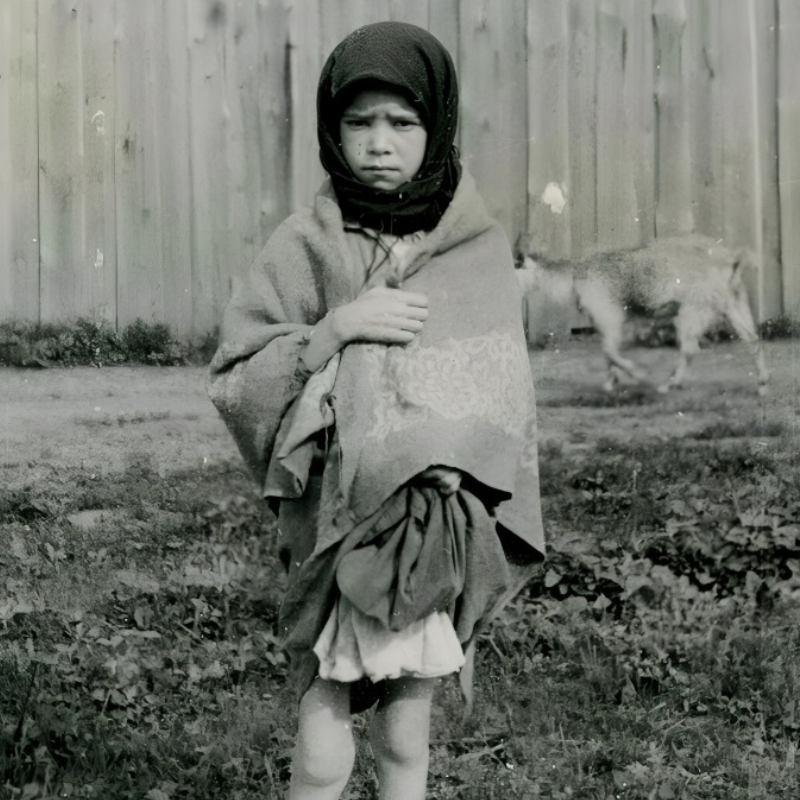
In 1967, a programme was broadcast on Soviet television, focusing on the year 1933. It contained various clips, including the opening of the White Sea Canal, the completion of the first Five-Year Plan and the beginning of the second, as well as football matches and the annual May Day Parade. It painted a picture of Soviet success in that era, of a country modernising to the same level as Britain or the United States under the banner of Communism. But many watching would have remembered 1933 not as a year of success. Rather, they would have remembered skeletal corpses lining the streets, people motionless and swollen with hunger, having desperately to scour the countryside for anything which could pass as edible. To them, 1933 was the year of the Holodomor.
 The Holodomor, meaning ‘killing by hunger,’ was a famine that took place during late 1932 and early 1933 in Ukraine. Historically, famines were not uncommon in the territories that constituted the USSR. Major ones had occurred, for example, in 1315-1317, 1601-1603 and 1891-1892 and even as recently as 1921-1922 in the Volga region, Ukraine, Kazakhstan and elsewhere. In 1932-33, famine affected large parts of the Soviet Union but Ukraine was different. What makes the Holodomor stand out was that it occurred during a time of peace, in one of the world’s most fertile regions and was the direct result of government policy. It was a genocide. The famine led to the deaths of nearly four million people and was one of the most appalling crimes of the twentieth century. Despite this, it remains widely unknown, still affected by the censorship and oppression which marked the Soviet Union.
The origins of the Holodomor can be found in the chaos of the 1917 Bolshevik Revolution and resultant Russian Civil War. During this period, Ukraine was a focal point, with forces of the Bolsheviks, nationalists, White armies, anarchists, and foreign powers all vying for authority and influence. The Soviet Ukrainian Government, which was formed in 1919, requisitioned massive amounts of grain from peasants (25% of the harvest in 1920/1921[1]) in order to feed the Red Army and Russian cities, whilst also suppressing the Ukrainian language and culture. These policies aligned with Lenin’s War Communism but devastated Ukraine and its people, causing widespread resistance and demonstrating that Ukraine’s deeply agrarian society would never truly accept or adapt to communist policies. The Civil War also illustrated the extensive threat a hostile, independent Ukraine posed to the Soviet Union, especially if allied with Poland, causing a long-lasting mistrust among Soviet leaders of anything which had the potential to foster Ukrainian calls for freedom.
In 1921, the New Economic Policy (NEP) was adopted, producing an uneasy stability as the unpopular grain seizures were replaced by a tax to be paid in kind to the government, and any surplus grain could be sold on the market at prices set by the state. This system allowed peasants to moderate how much they kept and sold, with profit providing an incentive for efficiency, whilst a policy of Ukrainianization allowed citizens to feel more comfortable within the USSR. However, throughout the 1920s, as Stalin consolidated his rule, the NEP created economic issues. Grain was only bought at the low prices set by the government, causing farmers to stockpile it in the hope that prices would eventually rise. Furthermore, advanced agricultural equipment was expensive and often rare, leading to a lack of modernisation in food production, meaning that by late 1927, there was an acute grain shortage which jeopardised growing cities, the Red Army and the grain exports which the USSR was using to finance its development.
The shortage prompted trips by multiple members of the Soviet leadership to resolve the issue. Anastas Mikoyan visited the Northern Caucasus, and Vyacheslav Molotov the Ukraine. But most consequential was Joseph Stalin’s trip to Siberia in January 1928. Here, Stalin oversaw local meetings and believed he had found and could resolve the problem at hand, subsequently demanding the forcible seizure of large stores of grain which had been hoarded by the so-called ‘kulaks’ – peasants who had, according to communist ideology, grown wealthy and successful by exploiting their fellow man. Stalin’s conclusion was that throughout the USSR there was widespread sabotage being conducted by these kulaks, but also by nationalists and foreign agents (in particular Poles). Moreover, he thought that there were fundamental flaws in the NEP which were driving the grain shortage. The solution, as Stalin saw it, was simple; he would collectivise farms into entities large enough to maximise efficiency, whilst ensuring easy grain collections and preventing the rise of kulaks. He would also begin the process of ‘eliminating the kulaks as a class’ and, most importantly, he would reintroduce the forced grain requisitions that had previously plagued the countryside.
The first Five-Year Plan was introduced in late October 1928, focusing on industrialisation, and was altered in 1929 to include collectivisation as state policy, forcing the farms to produce grain which was immediately taken by the state. By March 1930, around 65% of farms and 70% of working animals had been collectivised[2], theoretically increasing productivity, but actually seeing a marked decline, for example, in Autumn 1930, when Ukraine’s harvest was 60% lower than expected[3]. These shortfalls were driven by unreasonable expectations, poor weather, and no incentive for peasants to work, as they did not own the land. In addition, many resisted the collective farms being imposed on them, refusing to join them or slaughtering their livestock in protest.
The effects of ‘dekulakisation’ were devastating. Over two million were deported to Siberia and Central Asia and tens of thousands were executed by ‘troikas’, three-man councils who carried out swift trials and punishments. By 1931, a similar situation as had occurred in 1927/1928 arose, with a lack of grain with which to feed the cities and export for foreign currency. Measures became increasingly extreme. Groups of activists searched houses and confiscated all the grain they could find, a morbid indication of what was to come. In 1931, peasants were left with a little over 1000 calories worth of grain per day, and by 1932, that figure had fallen to 750 calories[4]. People quickly became malnourished and grew thin, often forced to steal from the collective farms out of desperation. Stalin was informed about the famine in Ukraine from multiple sources. But instead of seeking to alleviate it, he made it worse.
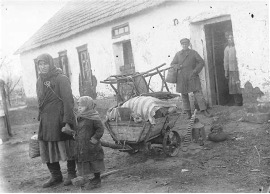
On August 7th 1932, the ‘Decree about the Protection of Socialist Property’ was passed, ordering either ten years imprisonment or execution for anyone was caught taking grain from a collective farm for personal use, and within months, thousands had been jailed or killed. Despite this law and others like it, Ukraine reached less than half of its original target by October, and still, the Soviet government blamed sabotage and local party incompetence. A blacklist system was introduced, cutting off trade for any villages which failed to meet their quotas, closing their shops, and confiscating all available food. Additionally, Vsevolod Balitsky was appointed as an OGPU special representative in Ukraine, arresting thousands of regular people and purging the leadership of the Ukrainian Communist Party. Finally, in the winter of 1932/1933, a passport system was introduced to prevent rural peasants from moving to or working in the cities to find food. The borders of Ukraine were completely sealed to prevent anyone from leaving. At this point, the Holodomor reached its terrifying climax, as millions were deliberately trapped in Ukraine, unable to leave as food became increasingly scarce.
Activist brigades, comprised of local party officials, Komsomol youths, urban workers, or even people from neighbouring villages, conducted extensive searches of houses not just for grain, but anything edible, including seeds required for sowing the next crop. They used long metal rods to investigate every possible place where food might be hidden and would often torture people for the location of anything hidden, crushing fingers in doors, and pushing needles under fingernails. Some volunteered because of fear, promises of food, or occasionally sadism, but indoctrination also pushed many over the edge, dehumanising anyone who posed a ‘threat’ to the regime. Vasily Grossman, a celebrated reporter and novelist, asked, “Why was my heart so frozen at the time? When such terrible things were being done, when such suffering was going on all around me?”[5]. Any and all food was seized, and by the beginning of 1933, there was no food left in Soviet Ukraine.
People turned to eating anything edible they could find – boiled leather, tree roots, bark, grass, and grain husks. Disease became rampant as people’s immune systems began to break down. Bodies collected on the sides of roads and in houses, either abandoned as no one had the strength to bury them or buried in secret by activists and officials determined to try and hide any evidence of famine. Some parents killed their own children, either as an act of mercy, to end the responsibility of feeding them, or, in rare cases, to cannibalise them. Many children were abandoned at railways, in the belief they would be brought into the cities and orphanages, with parents hoping that the very same state which was causing the ongoing famine would care for them.
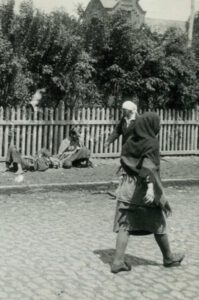
The death toll of the Holodomor across the entire USSR was between 5.7 and 8.7 million, and in Ukraine specifically, it was most likely 3.9 million[6] (around 10% of Ukraine’s population at the time). But the result of the Holodomor was not just death. Many became both too physically and mentally weak to resist the will of the government. State-owned Torgsin shops took precious metals in exchange for food, forcing people to give up jewellery or family heirlooms for grain. In even more desperate situations, graves were robbed in search of valuables, a crime which was often overlooked by the authorities, who actively wished for the end of religion. In 1932 alone, Torgsin shops brought in 21 tonnes of gold, over one and a half times what was mined in the USSR that year[7]. The Ukrainian national movement had been annihilated. People were forced to sell their culture and history for food. Traditional village life was completely uprooted, and any organised resistance, real or imagined, was crushed. For the Soviet government, this represented a complete victory. In 1932, Stalin had said to Lazar Kaganovich, “If we do not correct the situation in Ukraine immediately, we will lose Ukraine”[8], haunted by memories of how Ukrainian support had once brought armies under Denikin so close to Moscow, and how vital Ukrainian grain was to the Soviet Union. Stalin used starvation to crush Ukrainian resistance to Soviet rule.
While horrific famine and unimaginable suffering was suffered in Ukraine, the grain exports of the USSR increased, bringing in foreign currency and machinery and fostering an image of success and stability. Any suggestion of a famine, let alone one caused by the state, was silenced by the Soviet Union for nearly sixty years, often violently. Ivan Kraval, the head of the census bureau, was executed for revealing how the population of the Soviet Union had fallen due to the famine. Officials who reported cases of famine to the government were arrested. Gareth Jones, who documented and reported on it, was denounced. Walter Duranty’s access to exclusive interviews was dependent on his denial of mass starvation. Duranty defended instances of ‘hunger and malnutrition’ in the USSR in 1933 by saying, “you can’t make an omelette without breaking a few eggs”[9] – a morbid comparison when the ‘eggs’ in question were millions of people. People who had to suffer over the course of weeks as their bodies deteriorated, eating things which offered neither survival nor comfort, watching their friends and relatives starve to death. All for the sake of a totalitarian state which violently oppressed its own citizens and fostered hatred through ideology.