Nazi Germany and the Soviet Union signed a so called “non-aggression pact”on 23rdAugust 1939. It stunned Europe. Communism and fascism were meant to be mortal enemies. Hitler had insulted and scorned the communist regime for years. Europe would have been even more stunned if they had known about the secret protocol in which Hitler and Stalin agreed to carve up large parts of Eastern Europe between them.
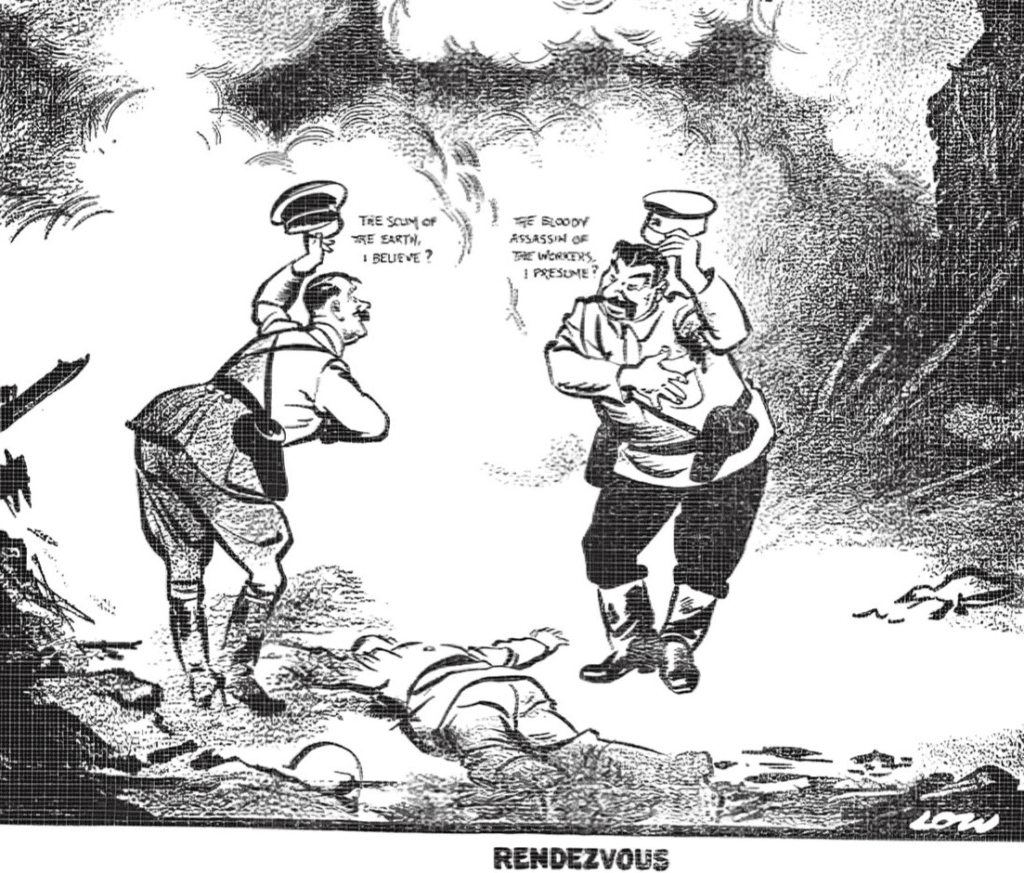
On 1st September, Germany invaded Poland. Two weeks later, the Soviet Union invaded Poland from the East. The two armies met in the middle and celebrated.
Some historians see the pact as the starting gun to the Second World War. The pact meant that Hitler could grab half of Poland without the risk of being opposed by the Soviet Union.
Some have seen it as a deal which meant that the biggest victor of the Second World War was the Soviet Union. It increased the chances that Hitler would spend some of his strength fighting “the other capitalist countries” instead of the Soviet Union. But how do you see it?
The pact was a pivotal moment in the 20th century and has the subject of a podcast by The Rest is History: https://www.bbc.co.uk/sounds/play/p0kw9hd8 and a book by Roger Moorhouse – a trustee of the Foundation – called The Devil’s Alliance.
Contemporary cartoon in the Evening Standard by David Low when Hitler and Stalin both invaded Poland.
About the essay:
All essays submitted will be checked using AI-detection and plagiarism software. Entries found to be substantially generated by AI or copied from other sources will be disqualified.
Please note that this essay prize is different from many others. There is no set question.
We are looking for clear, readable essays which describe the Nazi-Soviet Pact including the events that led up to it; the actual signing of the pact; the invasions that immediately followed and the other consequences.
In addition to this, we want to hear your own perceptions and observations about the pact and what it meant for those who were made the pact or were affected by it.
There is no requirement to reference sources, but we recommend including five to ten endnotes, particularly if you refer to a lesser-known fact or advance a controversial line of argument.
Essay length: 1,800–2,000 words (endnotes do not count).
UK Prize
First prize: £1,600 Second prize: £750 Third prize: £600 Fourth prize: £250 Highly commended: £150
The top three prizes will be divided equally between the student and the school. The money for the fourth prize and those highly commended will be awarded directly to students.
A further five to seven entries will be commended and receive a certificate.
This competition would particularly suit students wishing to strengthen their UCAS personal statements.
The UK prize is open to students who will be in Year 12 or 13 in the academic year 2026–27 and who are resident in the United Kingdom.
International Prize
Students residing outside the UK are eligible for the international prize.
The best international essay will receive a prize of £300.
Other overseas entries may be highly commended or commended according to merit.
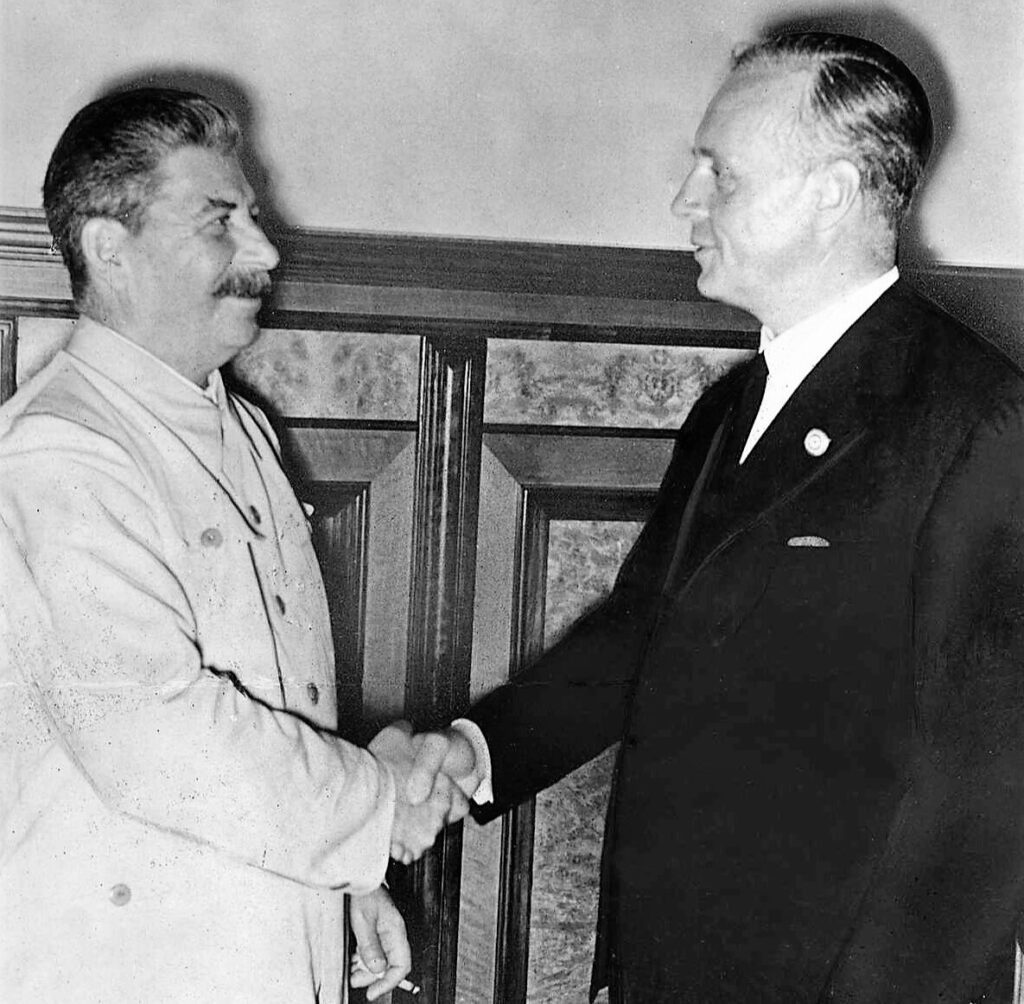
Joseph Stalin and Joachim von Ribbentrop, Nazi Germany’s Foreign Minister, in Moscow on 23 August 1939, following the signing of the Nazi–Soviet Pact.
Deadline and awards ceremony
The deadline for entries is 12.00 pm (noon) on Sunday 24 January 2027 (GMT).
Each candidate may submit one entry only, but there is no limit to the number of entries from any school.
There is no fee to enter. Full terms and conditions are available on our website.
The prizes will be awarded at a ceremony held at a prestigious central London location.
Register your interest
Please register your interest using the link below. Registration does not oblige you to submit an essay, but it means you will receive updates, including suggested sources, background reading, and guidance on approaching the topic.